What to Do in the First 24 Hours After a Burst Pipe in Your Keene Home
The first hour after a burst pipe decides if you're looking at a $2,000 job or a $12,000 job. Shut the water main, kill the power to the flooded area, photograph everything, and call a restoration crew. Here's the full 24-hour action plan from a Keene foreman.
Published · By Nathan Parmenter
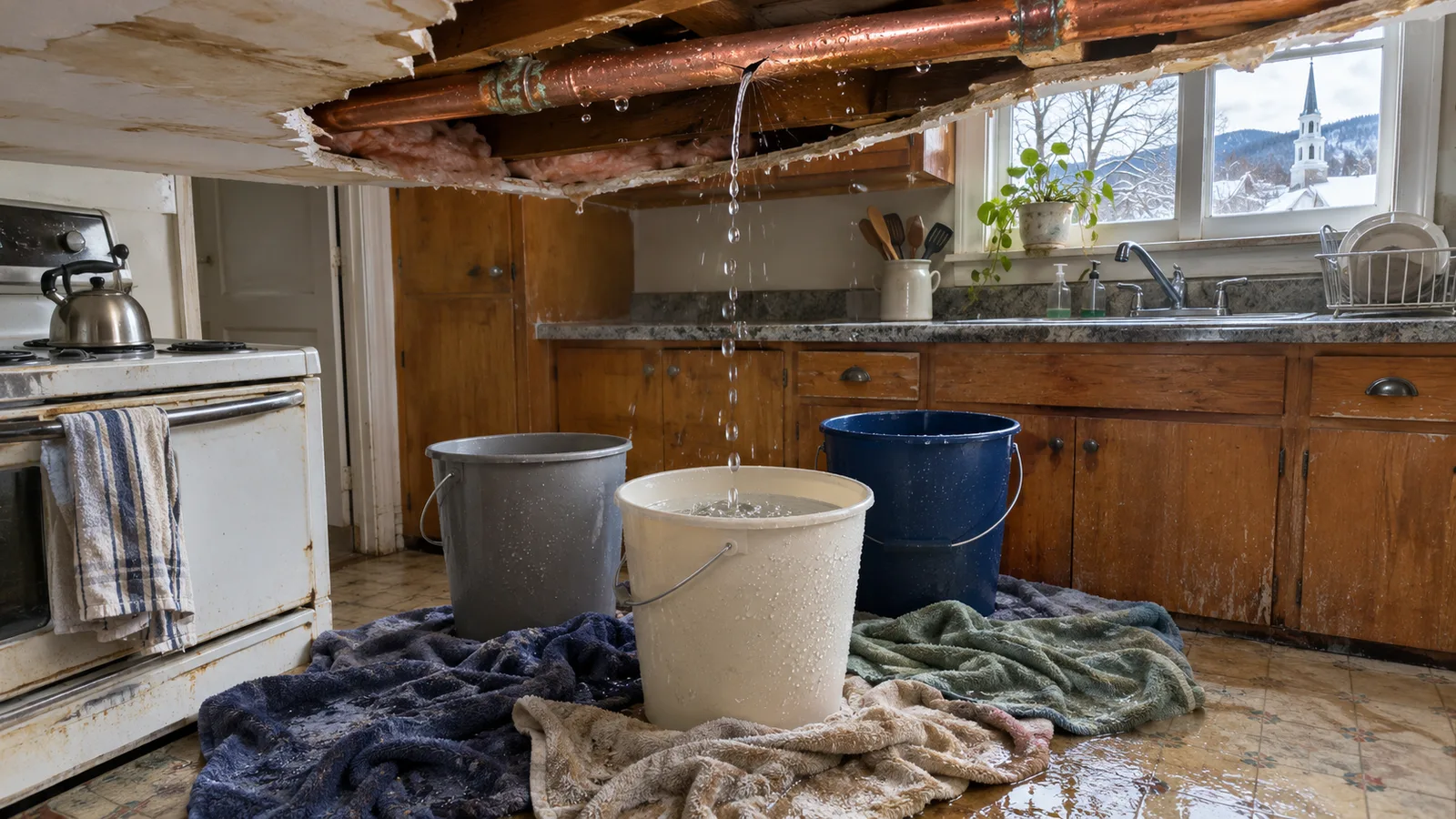
The first 24 hours after a burst pipe in your Keene home decide if you're looking at a $2,000 repair or a $12,000 restoration scope. Here's the honest sequence from a foreman who has worked these calls across Cheshire County for 20-plus years: shut the water main, kill the power to the flooded area, photograph everything for insurance, and call a restoration crew inside the first hour. Everything else is downstream of those four steps.
What should I do the moment I see water pouring?
Shut the main water valve first, before anything else. In most Keene homes the main shutoff is in the basement near the water meter, or just inside the front foundation wall where the service line enters. In older Downtown Keene apartments and West Keene ranches it might be behind an access panel in a closet. Turn it clockwise until it stops. If the valve won't close or you can't find it, call the Keene water department emergency line and they can shut off at the street. Then kill power to the flooded area at the main breaker panel. Never walk in standing water with the power still on.
How fast do I need to call someone?
Inside the first hour if you want to save flooring, drywall and trim. The 48 to 72 hour mold window starts the second water touches organic materials, and in Keene's old-house housing stock with granite-rubble foundations that hold humidity year-round, that window is tighter than in a drier climate. A pipe that burst and sprayed for 15 minutes, caught fast, is a drywall patch and a 2-day dryout. The same pipe that ran 4 hours before anyone shut it off is a $5,000 to $8,000 job with full wall demo. Call us inside the first hour and we're usually on site in 90 minutes 24/7.
What should I document before anyone touches anything?
Photograph everything before cleanup starts. The water line on the wall, the burst pipe if you can see it, water on the floor, soaked furniture, any visible damage to ceilings below the burst. Video walkthrough of every affected room. Save the burst section of pipe if the plumber removes it, because adjusters sometimes ask to see it as evidence of a sudden-and-accidental event. Note the time you discovered the leak, the time you shut the water off, and the outside temperature if it's a winter burst (Keene regularly hits -10°F in January and February, which supports a cold-snap burst claim).
When do I call insurance versus a restoration crew?
Call the restoration crew first, then call insurance. Here's why: your insurance company will ask you what the water source is, how long it ran, what's affected, and whether the water is clean or contaminated. A restoration foreman on site can answer all of those questions with moisture meter readings and a water category call in the first 30 minutes. Trying to file a claim before you have real information gets claims mis-scoped and sometimes mis-denied. Standard NH homeowners policies cover sudden and accidental water damage from a burst pipe, so the claim is almost always in your favor if documented properly.
What should I move or protect while I wait for the crew?
Lift anything valuable off the floor if you can do it safely. Electronics, photo albums, important paperwork, rugs you want saved. Move upholstered furniture off wet carpet to dry floor if you can get help lifting. Don't try to drag a wet sofa by yourself, waterlogged furniture doubles in weight and backs get hurt. Open windows if it's warmer outside than inside to drop humidity. Don't set up household box fans and household dehumidifiers thinking you're helping, they move 1/10th the air of a commercial air mover and sometimes blow mold spores around before the real equipment arrives.
What happens when the restoration crew arrives?
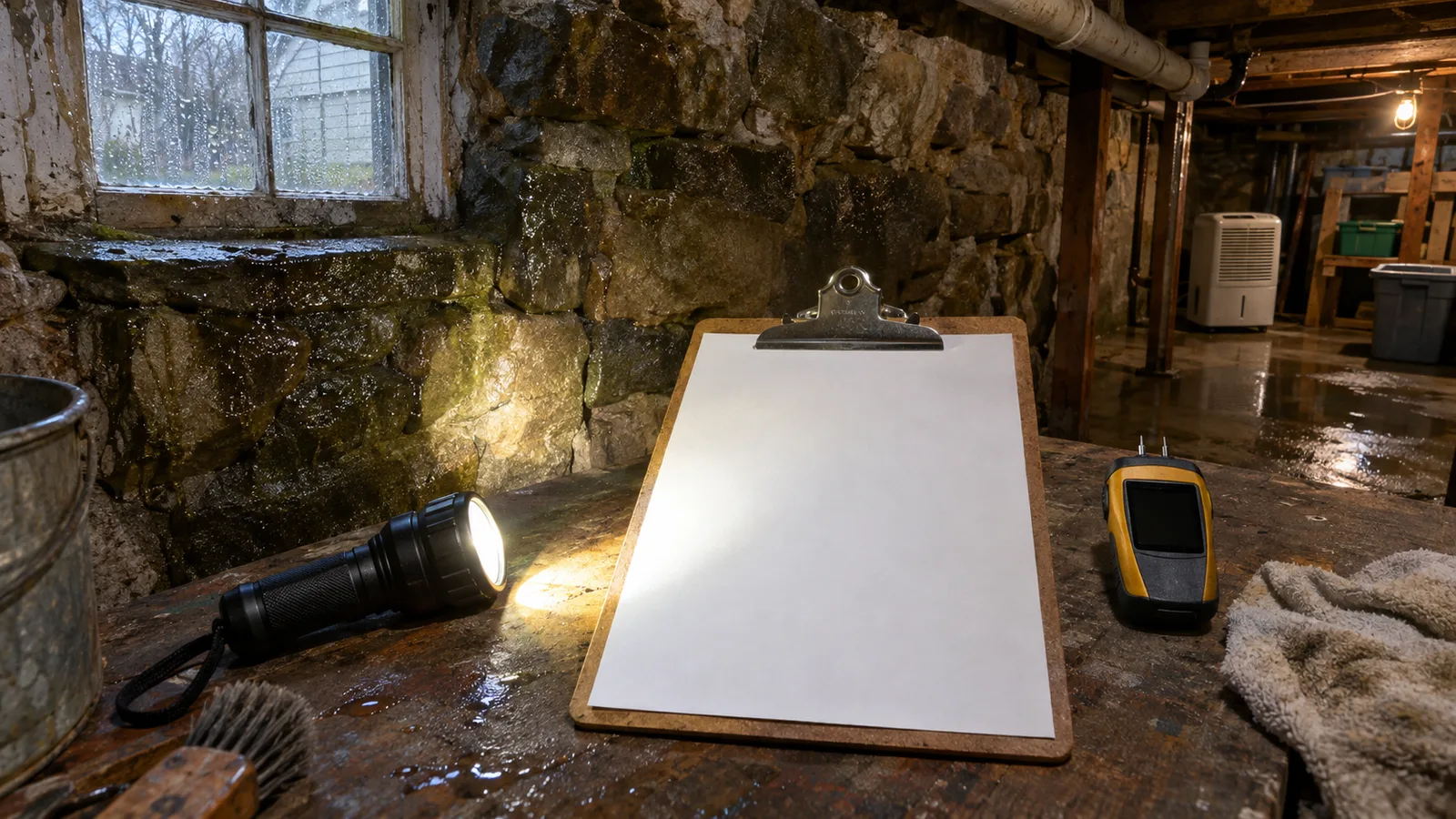
First 30 minutes: water category call on a 1 to 3 scale, moisture meter on all affected walls and framing, thermal camera scan to find water hiding behind drywall you haven't seen yet, full photo log. Hour 1 to 4: truck-mounted extraction of standing water (our units pull 100+ gallons per minute), unsalvageable drywall and insulation cut back and bagged, air movers and LGR dehumidifiers set and running. Day 1 to 5: daily moisture readings, drying continues until framing hits below 15% on the meter. Then rebuild. If you want one crew through the whole job, we handle extraction through final paint. See our burst pipe water damage repair page for the full scope.
What if the pipe burst in a vacant Keene home?
This is the hardest scenario because the water usually ran for hours or days before discovery. Vacant seasonal homes in Marlborough and around Spofford Lake in Chesterfield are where we see this most in winter, when owners leave heat at 45°F with water on. The damage is often total-loss territory on multiple rooms. Insurance concern: standard policies often exclude damage from pipes that burst in a vacant home where heat was below 55°F or the water wasn't shut off. Read your policy. We still restore these homes, but the coverage reality is often out of pocket, so we have the honest conversation on day one.
How do I prevent the next burst pipe?
Keep heat above 55°F in any part of the house with plumbing, including unheated basements, garage-adjacent walls, and bulkhead crawl spaces. Insulate exterior-wall supply lines, which is the single most effective winter fix in older Keene housing stock. Shut off and drain any supply line serving an outdoor spigot or seasonal fixture before December. Open cabinet doors on exterior-wall sinks during a cold snap to let house heat reach the pipes. Let a faucet drip during a sub-zero cold snap if you have a known vulnerable line. The last two are cheap insurance against a $5,000 claim.
If you're staring at a burst pipe in Keene and your heart's racing, call us and we'll talk you through shutting the water off while a crew is already rolling toward your house.